
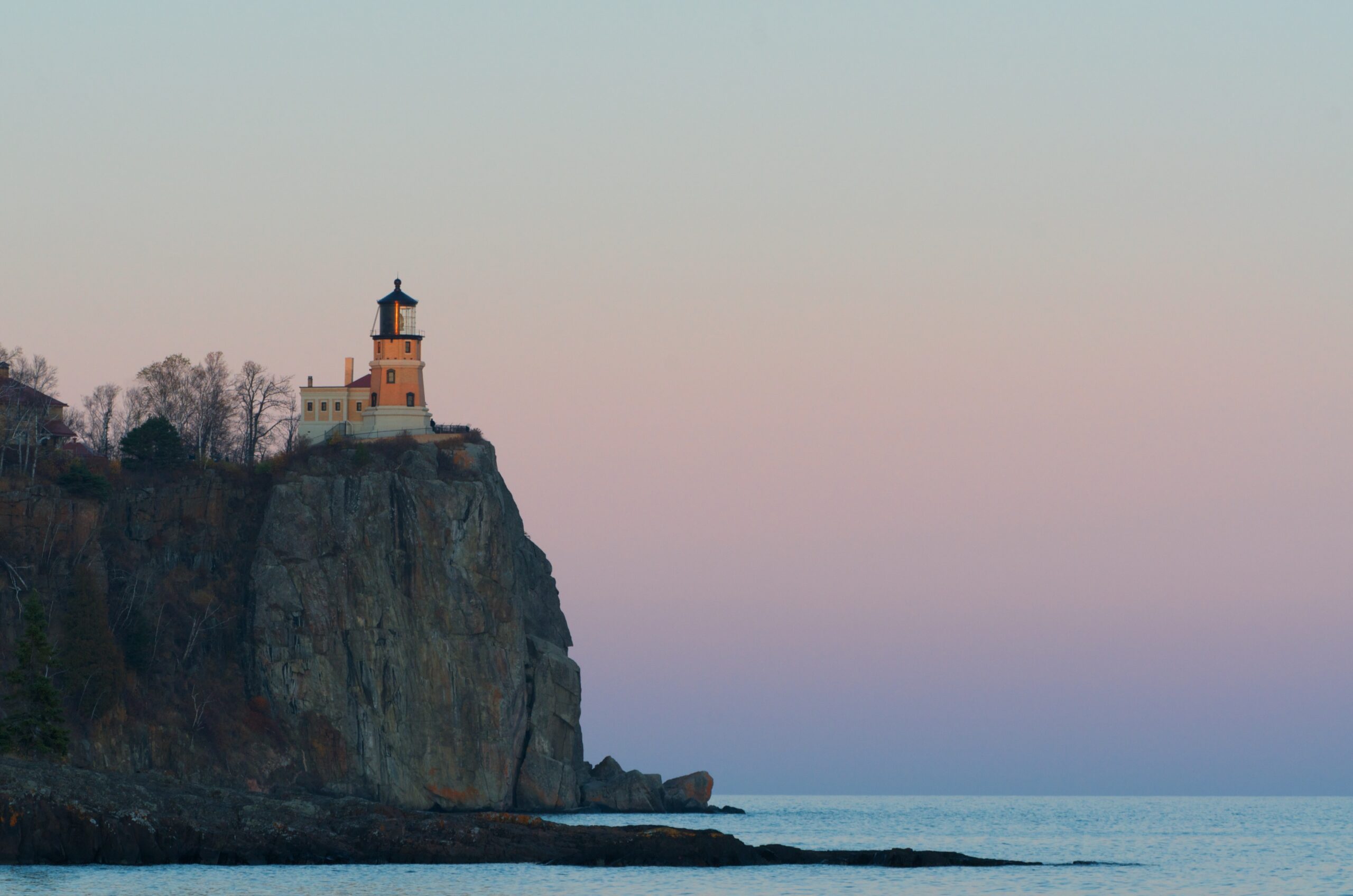
Photo by Pete Markham / CC BY-SA 2.0
There is a specific kind of silence found at a Lake Superior lighthouse. It is not the absence of sound, but rather the steady presence of the water against the shore. For over a century, these towers served as the only thread of connection between the isolated wilderness of the North Woods and the ships carrying the iron that built the modern world. Today, these light stations offer a window into a slower era. To visit them is to pay homage to the families who lived by the turn of the lens and the call of the foghorn.
While over 80 lighthouses stand watch across the jagged miles of the Lake Superior shoreline, each with its own story of endurance and survival, there are a handful that capture the true essence of the region. To help you begin your journey, we have curated four essential beacons that represent the rugged beauty, the tragic history, and the architectural heritage of our inland sea.
1. Split Rock Lighthouse
Two Harbors, Minnesota

Perched on a 130-foot sheer cliff, Split Rock is arguably the most photographed lighthouse in the United States. Completed in 1910 following a devastating November gale, it was an engineering marvel of its time, as all materials had to be hoisted up the cliff face by crane.
The experience here is as much about the grounds as the tower. You can walk the restored keeper’s home, where the dining table is set as if the family has just stepped away. The site feels remarkably preserved, offering a visceral sense of the isolation and the beauty of life on the North Shore.
- Cost: A Grounds Pass is $8. Full tours (when available) are approximately $15-$20.
- Pro Tip: Note that the historic site has been undergoing a major construction project, so check the Minnesota Historical Society schedule before you arrive to avoid any closures.
- Photo Spot: For the iconic view of the lighthouse on the cliff, take the “Trail to the Lake” from the state park parking lot down to Pebble Beach.
2. Whitefish Point Light Station
Paradise, Michigan

Whitefish Point serves as the sentinel of the Shipwreck Coast, a notorious 80 mile stretch of shoreline reaching west toward Munising. This point is a vital pivot for every vessel entering or leaving Lake Superior. That strategic importance is why Congress first established a light here in 1849. It remains the oldest operating light on the lake, with the current iron tower standing as a silent witness to history since its construction in 1861 during the Lincoln administration.
The waters surrounding the point are as beautiful as they are treacherous. Of the 550 major shipwrecks documented across the floor of Lake Superior, nearly 200 of them are clustered in this specific vicinity. Most notably, the SS Edmund Fitzgerald rests just 15 miles to the northwest, a somber reminder of the power the lake holds over even the largest modern vessels.
- Cost: Adult admission to the Shipwreck Museum is $15. Because the site is managed by a non profit society, your ticket directly funds the ongoing preservation of the 1861 Keeper’s Quarters and the historic Surfboat House.
- Pro Tip: The Point is a geographic corner where the wind is notoriously unpredictable. Even on a warm July day, bring a windbreaker because the temperature can drop ten degrees the moment you step toward the dunes.
3. Au Sable Light Station
Pictured Rocks National Lakeshore, Michigan

While many lighthouses are accessible by car, Au Sable requires a bit of a hike. The 86-foot brick tower is reached via a 1.5-mile walk along a level, gravel access road from the Hurricane River Campground.
The journey is half the magic. As you walk, keep an eye on the beach below the trail; at low water, the wooden ribs of ancient shipwrecks are often visible in the sand. When the white tower finally emerges from the trees, it feels like discovering a secret. The station is still active today, though it now runs on a small solar-powered light that shines over the Grand Sable Dunes every evening.
- Cost: Access to the grounds is free with your Pictured Rocks park pass. In the summer, the National Park Service offers guided tower tours for $5 per person.
- Pro Tip: Visit in the early morning or late evening. The light at these hours turns the white brick of the tower into a soft gold, and the trail is often much quieter.
4. Eagle Harbor Lighthouse
Keweenaw Peninsula, Michigan

Tucked into the jagged volcanic rocks of the Keweenaw Peninsula, the Eagle Harbor Light is the heart of a charming maritime village. The red brick structure was built in 1871 and still serves as an active aid to navigation for ships carrying ore across the lake. This site is unique because it functions as a museum complex. It includes a maritime museum, a life saving station, and even a mineral museum that showcases the copper history of the region.
The lighthouse sits on a rocky point that feels like the edge of the world. It is a place where the sunset seems to last an hour longer as it reflects off the crimson stone and the crisp white trim of the keeper’s house. The light here represents the resilience of the Copper Country and the families who stayed to tend the flame through the harshest winters in the Midwest.
- Cost: Admission to the entire museum complex is $8 for adults. This fee allows you to explore the lighthouse interior as well as the specialized museums on the grounds.
- Pro Tip: The Keweenaw is known for its dark skies. If you stay in the area after dusk, the lighthouse grounds offer an incredible vantage point for stargazing or catching a glimpse of the Northern Lights over Lake Superior.


