
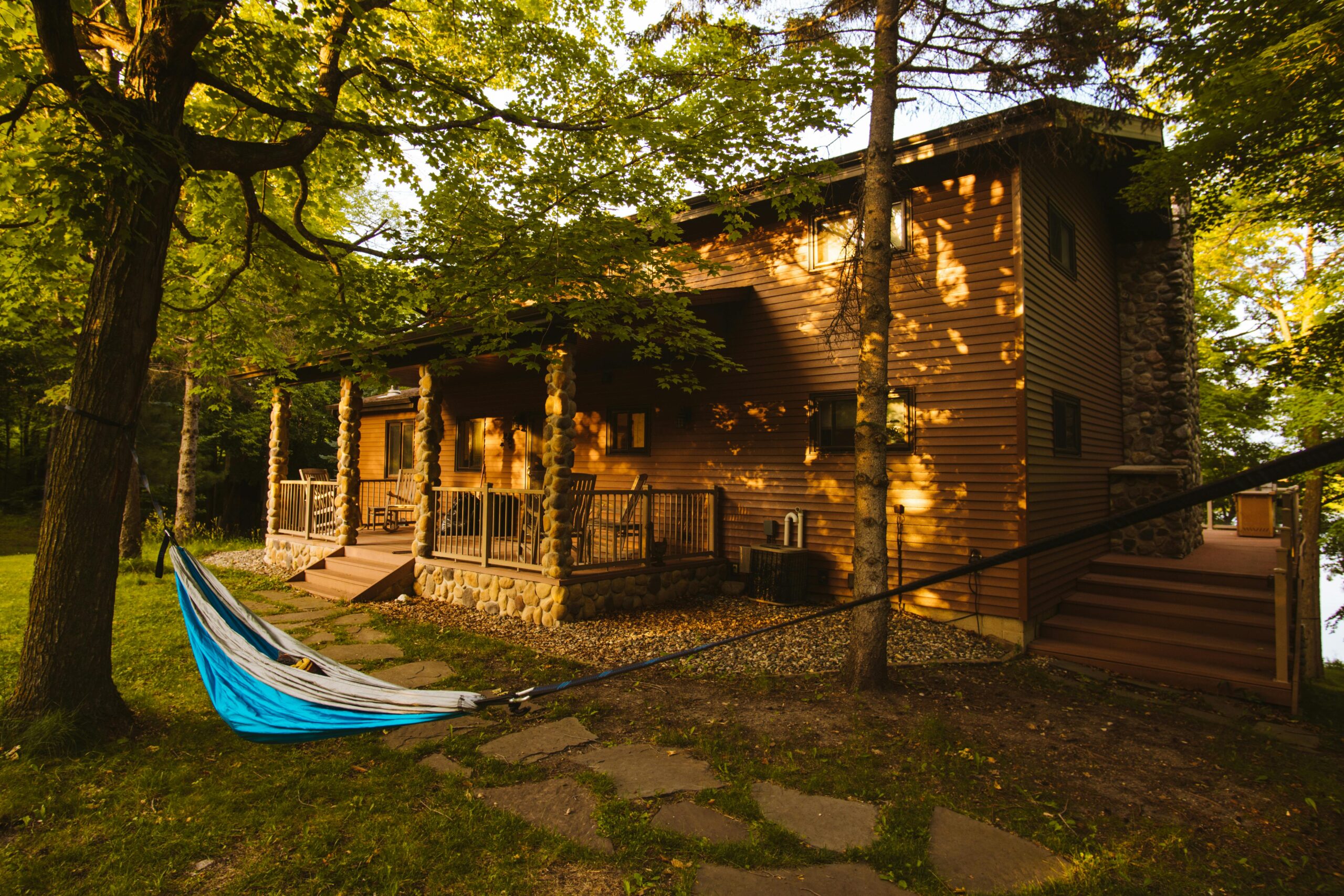
That first glimpse of water through the treeline. The smell of pine and old wood. The dock going in cold. Here is what opening the cabin for the season is all about, and how to do it right.
You know the exact moment. The highway is long behind you. The county road gave way to gravel fifteen minutes ago, and now the car is creeping, tires popping on loose stone, and the car goes quiet as everyone begins to look.
That first glimpse of the water, holding promises of warm summer days ahead, is what keeps us going even on the longest winter nights. The car stops and you prepare yourself for the long weekend of work ahead to ready the cabin for summer cookouts, sitting around the water playing Euchre, and staying up too late around the fire. The cabin is back. Summer is beginning. Whatever the past eight months had in store for you, for now, it is behind you at the county road.
Opening weekend at the cabin is one of the most beloved rituals in this part of the country, and for good reason. It has been happening, in one form or another, for well over a century. Families have been making this same drive, across Wisconsin, Minnesota, Michigan, Ohio, and beyond, since the railroads first started marketing the North Woods as a place worth getting to. Although the specific details may change with every generation, the feeling does not.
This is a guide to capturing that feeling and to the practical work that makes opening the cabin and preparing it for summer possible. Because opening the cabin right is what earns you the rest of the summer without worry.
The Drive North
Ask anyone who grew up with a family cabin what they remember most, and the drive comes up every time. The particular gas station where you always stopped to stretch your legs and get your favorite road trip snacks (mine was peach rings and Chex Mix). The moment the landscape shifted from flat farmland to rolling tree cover. The sign for the county that meant you were almost there. The slow turn down the two-track.
That drive is not just transportation. It is a decompression chamber. By the time you hit the gravel, something has been released. The lake does this to people. Even when they can’t see it yet, it’s working, calming our nervous systems and soothing our souls.
You always arrive with the car packed a little too full. Cleaning supplies, coolers, fishing rods, bedding, and of course, snacks. Kids are in the back. Half-finished coffee is going cold in the cupholder. The group chat is blowing up with ETAs from everyone else on their way.
The first tradition is the walk to the water before the car is unloaded, taking a moment to breathe in the fresh air, checking the lake level, the shoreline, and the dock situation. Looking for the loon pair that returns every year. Then, taking a deep breath, and getting to work.
Opening Weekend is a Team Effort
The division of labor on opening weekend is one of the most reliable features of cabin culture. It is almost never assigned. It is inherited. Dad handles the water system and whatever went wrong with the roof. Mom sweeps and checks for mice. Teenagers haul dock sections through cold water while Dad directs from the shore. Little kids head for the shoreline to look for frogs and other small critters.
The dock goes in first, always, because everything else follows it. In Minnesota and Wisconsin, “dock-in weekend” and “opening weekend” are used interchangeably, and the dock installation is a project significant enough to organize the whole day around. The sections are heavy. The water is cold. It always takes longer than you think it will. It is a project that requires everyone, and the collective complaining from the group is half the point.
When the last section is in, when someone walks out to the end, and the dock holds, and the water is glassy, and the tree line is reflected perfectly, that is the moment. That is when the season actually begins.
The first fire comes at dusk. The first cast from the dock happens within an hour of arrival for families with kids. The first sunset watched from the dock with something cold in your hand is the reason you do any of the rest of it. By the time you go inside, you have forgotten what you were worried about when you left home.
What is “cabin time”?

Every cabin family has a version of this: the hours slow down when you’re there. You lose track of what day it is by Saturday afternoon. Meals happen when people are hungry. A puzzle appears on the table and stays there for three days. The kids come in sunburned and muddy and happy in the specific way that kids at the lake are happy, which is different from any other kind of happy.
This is what people mean by “cabin time,” a slower, unstructured experience of hours and days that feels genuinely different from ordinary life. It is not an illusion. The lake does produce it. The removal of usual routines, the lake conditions determining your activities for the day, the physical work of maintaining a place, the enforced togetherness of a small cabin and a shared dock, these conditions create something that most families only find here.
Dale Mulfinger, the Minnesota architect who has spent decades designing lake cabins and thinking about what makes them work, put it this way: you want a kitchen where the person frying the fish can talk to the person stoking the fire. You want a puzzle on the table. You don’t want oversized bedrooms, because oversized bedrooms let people disappear. The cabin should pull everyone toward the same room, the same fire, the same view.
The pencil marks on the door frame track children’s heights over the years. The particular creak in the third dock section from the end that everyone in the family knows. The handmade sign at the end of the driveway. These are what Jeff Forester of Minnesota Lakes and Rivers Advocates means when he says that cabins are heirlooms, not assets. The value is not in the property. It is in the accumulated weight of the same people returning to the same place, year after year, doing the same things in the same order.
It sounds different depending on where you’re from
One of the quieter pleasures of cabin culture is the regional vocabulary. What you call your property, and how you describe going to it, says a great deal about where you grew up.
In Minnesota, it is almost always “the cabin,” regardless of how large or finished it is. You go “to the lake” or “to the cabin.” The state has 11,842 lakes of ten acres or more, and only four counties are without a natural lake; this abundance has made lake life central to the state’s identity. The Governor’s Fishing Opener — held every year since 1948, two Saturdays before Memorial Day — is treated as something close to an official state holiday.
In Michigan’s Lower Peninsula, the word is “cottage,” and you go “up north,” always lowercase, always directional. In the Upper Peninsula, where winters are longer, and the culture runs deeper, it’s “camp.” Yoopers use “camp” the way everyone else uses “cabin,” and the word carries the weight of Finnish heritage, of saunas and sisu and a relationship with the land that predates the resort era. The UP sauna, pronounced “sow-nuh,” taken seriously, followed by a plunge into the lake, is as integral to opening weekend as the dock.
Wisconsin lands somewhere in between, using both “cabin” and “cottage,” with the Northwoods of Eagle River, Minocqua, and Hayward as the heartland. The Wisconsin Department of Tourism describes “Up North” as “more of a state of mind than an actual place,” which is exactly right. The Friday night fish fry at the supper club, featuring beer-battered perch, old-fashioned cocktails, and potato pancakes, is one of the state’s greatest contributions to cabin culture, and opening weekend is not complete without one.
Ohio, Indiana, Illinois, and Pennsylvania each have their own relationship with the water. Ohio’s Lake Erie shoreline runs through Put-in-Bay and Lakeside Chautauqua, with a day-trip culture more than a cabin culture. The Indiana Dunes National Park draws crowds to 45 miles of Lake Michigan shoreline. Pennsylvania’s Presque Isle on Lake Erie is the state’s most-visited park, a beloved peninsula that draws millions of visitors every season. And Chicago is the great exporter, Chicagoans head to Michigan and Wisconsin in significant numbers every summer, and their presence has helped shape the character of lake communities across both states.
The opening weekend checklist

A practical guide to making sure the systems are running and the safety checks are done, so you can relax the rest of the summer.
Before you leave home
Restore utilities, including electricity, gas, internet, and phone, by calling service providers a week in advance. Verify your property and watercraft insurance is current. Check boat registration, which runs on a three-year cycle in Minnesota and Wisconsin. Pack cleaning supplies, batteries, a first aid kit, and rodent inspection gear: rubber gloves, an N-100 respirator mask, bleach, and trash bags. Spring cabin openings are high-risk for hantavirus exposure from deer mice that wintered inside. Do not skip the respirator when cleaning any space that shows signs of rodent activity.
The exterior
Walk the full perimeter of the cabin before going inside. Look for frost heave along the foundation as freeze-thaw cycles in Great Lakes soils can shift a foundation over a single winter. Inspect the siding for holes from squirrels or woodpeckers and for gaps at window and door frames from seasonal movement. Check all four sides of the roof from the ground, looking for lifted or curled shingles along the eaves where ice dams form. Examine the chimney for missing caps, damaged flashing, or cracked mortar joints. Clear the gutters and confirm downspouts are directing water away from the foundation. Note any damaged trees that could fall on the structure, as ice storm damage often doesn’t show itself until spring.
Water system startup
The water system is where most opening weekend crises originate. Inspect the wellhead for a tight cap, intact vent screens, and no rodent damage at the control box. Check the pressure tank’s air charge using a tire gauge at the Schrader valve before turning on any power — if water squirts from the valve, the bladder is ruptured, and the tank needs replacement. Turn on the pump breaker, pressurize the system, then open an outdoor faucet first and run it until the water runs clear, typically ten to twenty minutes. Work through each fixture in the cabin one at a time, flushing each for at least five minutes. Sulfur smell after a long winter of disuse is normal and resolves with thorough flushing. If the pump cycles on and off with all taps closed, there is a leak somewhere.
For the water heater: fill the tank completely before turning on the power. With an electric water heater, powering it on while empty will immediately burn out the heating elements. Confirm the tank is full by running a hot tap until water flows steadily before switching the breaker on.
Pest and wildlife inspection
Before cleaning any space showing signs of rodent activity, open windows and doors and leave the building for at least thirty minutes. Never sweep or vacuum rodent droppings — this aerosolizes the virus. Spray all droppings and nesting materials with a ten-to-one water-to-bleach solution, let it soak for five minutes, then wipe up with paper towels and double-bag for disposal. Seal any hole larger than a dime with steel wool and caulk. Set snap traps.
Check the attic for bat guano. Inspect eaves, deck undersides, and window frames for wasp and hornet nests before working around them. Look for carpenter ant frass in unpainted wood. Check dryer vents, range hood vents, and chimneys for bird nests, as these can be a major fire hazard if overlooked.
Interior systems
Replace furnace filters and run the system through a full cycle before relying on it. For wood stoves and fireplaces, inspect the firebox and damper for debris and animal nests, and have the flue professionally swept if it hasn’t been done recently. Test the electrical panel: turn on breakers circuit by circuit, test all GFCI outlets, and look for frayed or chewed wiring, as rodents can chew electrical insulation, which is a fire hazard. Plug in the refrigerator and wait 24 hours before stocking it. Run the washing machine through one empty hot cycle.
Replace batteries in every smoke and CO detector. Do not just test them; you should replace the batteries annually regardless. Replace any smoke detector older than ten years and any CO detector older than seven years. Check fire extinguisher pressure gauges. Restock the first aid kit and update the emergency contact list: local fire and sheriff, nearest hospital, plumber, electrician, well service, and nearest neighbor.
Dock and watercraft
Inspect dock sections for ice damage before installing, as a dock section that failed over winter can fail under weight in June. Check that the lake bed hasn’t shifted from ice movement, which can alter bottom conditions and change where footings need to sit. State permit requirements vary: Minnesota exempts docks meeting DNR General Permit standards. Wisconsin exempts most existing and new piers that meet DNR Pier Planner criteria. Michigan generally exempts seasonal removable docks for single-family use on inland lakes, but check local zoning; township rules are frequently stricter than state rules.
Before launching any watercraft, inspect the hull, motor, and trailer for winter storage damage. Check all hose clamps, the propeller, batteries, fire extinguisher, navigation lights, and PFDs. The number-one pre-launch item that experienced boaters still occasionally forget: install the drain plug.
Waterfront and shoreline
Wade or carefully inspect the swimming area for submerged hazards: glass, metal, sharp rocks, and branches deposited by spring ice. In zebra mussel lakes, water shoes are not optional as the shells cut like broken glass. Walk the shoreline for bank erosion, undercut edges, and any seawall or riprap displacement from ice shoves. Check the swim raft, ladder, and any anchored waterfront equipment for winter damage.
Invasive species protocol is now law in most Great Lakes states and is the right thing to do regardless of legal requirement. Before any watercraft enters the water, remove all plants, mud, and visible debris from the boat, motor, and trailer. Drain all water from the bilge, live wells, bait buckets, and motor. Zebra mussel larvae are invisible to the naked eye and survive in any standing water. Allow the equipment to dry for at least five days before moving to a different water body. Dispose of unused bait in the trash, never in the water or the lake. Report unusual algae blooms, especially blue-green cyanobacteria, to your state DNR.
The restocking list
Sunscreen, bug spray, and aloe. Fire starting supplies. Fresh batteries in every flashlight and lantern. Trash bags, paper towels, and cleaning supplies. Propane for the grill. Boat fuel. Fishing licenses are required in every Great Lakes state and are available online. Walleye limit cards for Minnesota. Kindling and firewood, if local supplies aren’t stocked yet. And whatever the family’s first-night dinner tradition is, something not to be skipped.
The best thing is just getting there

Every cabin family, no matter how long they’ve been doing this, will tell you the same thing: one of the best parts is just getting there. It’s not the swimming or the fishing or the Friday night fish fry, though those are all good. It’s the moment you arrive. The first glimpse of water through the trees. The car door opens, and the smell comes in. The sound of the screen door and the particular mustiness of a cabin that has been closed all winter, which somehow still smells like summer anyway.
“The best thing is just getting there,” one Minnesota cabin owner said, “with the whole summer still ahead. You leave your worries behind.”
That is what this is. That is what it has always been. One of the most reliable features of cabin culture is the feeling that a day at the cabin is worth two or three days anywhere else. The lake slows the clock. The dock offers adventures for all ages. The loon calls at two in the morning, and you’re glad you’re awake to hear it.
Open the cabin right. Do the checklist. Get the systems running. Then put down the list, walk out to the end of the dock, and remember why you do this every year.
The summer is right there in front of you, and it is just beginning.
Inspired by the Great Lakes and want to bring that feeling home? Read our guide to Bringing the Lake Home: Natural Textures and Tones Inspired by the Great Lakes here.
Highland & Harbor is a Great Lakes lifestyle brand rooted in the culture, heritage, and natural beauty of the inland seas.
Sources
The following sources informed the facts, statistics, quotes, and historical claims in this piece. Claims are keyed to the relevant passage in the text.
“Railroads first started marketing the North Woods as a place worth getting to” Shapiro, Aaron. The Lure of the North Woods: Cultivating Tourism in the Upper Midwest. University of Minnesota Press, 2013. Referenced via Amazon listing and Mpls.St.Paul Magazine feature. https://www.amazon.com/Lure-North-Woods-Cultivating-Tourism/dp/081667793X
Dale Mulfinger quote on cabin design (“you want a kitchen where the person frying the fish…”) Star Tribune. “Minnesota’s ‘cabinologist’ reveals why we love cabins.” https://www.startribune.com/minnesota-s-cabinologist-reveals-why-we-love-cabins/459756103
Jeff Forester quote (“cabins are heirlooms, not assets”) Mpls.St.Paul Magazine. “Cabin Pressure.” https://mspmag.com/travel-and-visitors-guide/cabin-pressure/
Minnesota has 11,842 lakes of ten acres or more; only four counties lack a natural lake Explore Minnesota. “How to Live the Lake Life in Minnesota.” https://www.exploreminnesota.com/minnesota-lake-life-guide
The Governor’s Fishing Opener — held every year since 1948 Lake Mille Lacs. “Why Mille Lacs is the Heart of Minnesota’s Fishing Opener Traditions.” https://millelacs.com/blog/all-blog-posts/why-mille-lacs-is-the-heart-of-minnesotas-fishing-opener-traditions
Minnesota cabin count (111,194 cabins) and the 124,000 cabin owners who head north each Memorial Day weekend Star Tribune. “Love it or loathe it? Minnesotans weigh in on cabin opening ritual.” https://www.startribune.com/love-it-or-loathe-it-minnesotans-weigh-in-on-cabin-opening-ritual/483636001/
Wisconsin Department of Tourism describes “Up North” as “more of a state of mind than an actual place” Encyclopedia of Milwaukee. “Up North.” https://emke.uwm.edu/entry/up-north/
Wisconsin’s Friday night fish fry as emblematic of state cabin culture Islands.com. “A Friday Night Fish Fry Is This Fishing-Obsessed Midwest State’s Mouth-Watering Summer Tradition.” https://www.islands.com/1910213/friday-night-fish-fry-fishing-obsessed-midwest-state-wisconsin-mouthwatering-summer-tradition/
Indiana Dunes designated a National Park in 2019 Encyclopedia Britannica. “Indiana Dunes.” https://www.britannica.com/place/Indiana-Dunes
Presque Isle, Pennsylvania — the state’s most-visited park PA Bucket List. “Exploring Presque Isle State Park in Erie.” https://pabucketlist.com/exploring-presque-isle-state-park-in-erie-pa/
Hantavirus risk during spring cabin openings; CDC guidance on cleaning protocol (bleach solution, N-100 respirator, no sweeping or vacuuming) Centers for Disease Control and Prevention. “Hantavirus Prevention.” https://www.cdc.gov/hantavirus/prevention/index.html
Invasive species protocol (“Clean, Drain, Dry”); zebra mussel larvae invisible to naked eye Clean Lakes Alliance. “Clean Boats Clean Waters.” https://www.cleanlakesalliance.org/clean-boats-clean-waters/
MSU Extension. “Don’t move a mussel, or a water milfoil or any other aquatic invasive species — Clean Boats Clean Waters.” https://www.canr.msu.edu/news/dont_move_a_mussel_or_a_water_milfoil_or_any_other_aquatic_invasive_species
“The best thing is just getting there, with the whole summer still ahead. You leave your worries behind.” Southernminn.com / Owatonna Peoples Press. “Going Up North to a Minnesota lake cabin.” https://www.southernminn.com/owatonna_peoples_press/community/going-up-north-to-a-minnesota-lake-cabin/article_0e7828ac-5671-11ef-9517-23bc541f50c5.html


