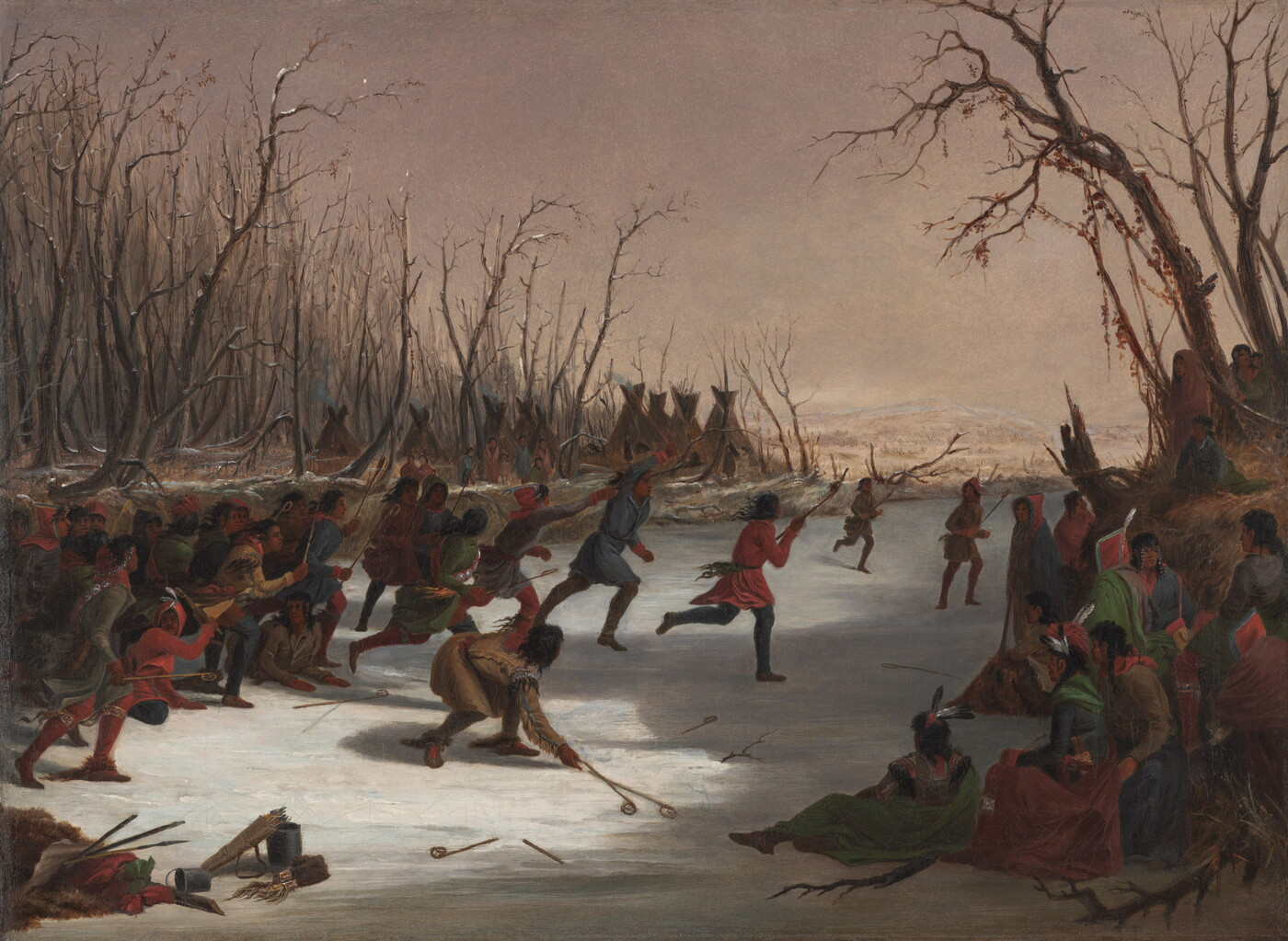
Ball Play of the Dakota on the St. Peter’s River in Winter
Seth Eastman, 1848
Courtesy of Amon Carter Museum of American Art
Winter has always shaped life in the Great Lakes region. Long before central heat and plowed roads, the season arrived early and lingered well into spring, bringing deep snow, frozen waterways, and long, quiet nights. Life slowed. Movement changed. Communities turned inward.
In an era when winter travel was limited and daylight scarce, the colder months were not only about endurance. They were about rhythm, routine, and finding ways to pass the time together when the landscape itself asked for stillness.
Across the Great Lakes, winter became a season defined as much by human connection as by the cold.
The Shape of a Great Lakes Winter
Great Lakes winters have never been gentle. Snow accumulated quickly, winds swept across open water and frozen shorelines, and temperatures demanded preparation and care. Food stores, firewood, and clothing were essential. So was the community.
For Indigenous communities across the region, winter life followed seasonal rhythms that were refined over generations. For people living at or near trading posts, winter brought a shift in daily routines. Hunting and trapping continued when possible, but many activities slowed. Travel often followed frozen rivers and lakes, which at times made winter routes more reliable than muddy spring paths.
Indoors, life grew quieter and more communal.
Long Nights and the Art of Storytelling
With darkness falling early, evenings stretched long. Storytelling filled the hours.
Across many Indigenous nations of the Great Lakes, winter was traditionally a season for sharing stories. Oral histories, lessons, and cultural knowledge were passed by firelight, preserving memory and explaining the natural world. Stories were not simply entertainment. They carried meaning, instruction, and comfort through the coldest months.
In cabins and trading posts, storytelling crossed cultures. Accounts from this era describe long evenings spent recounting journeys, previous winter memories, and places yet to be seen. These moments anchored people to one another when isolation was a constant risk.
Winter became a season of remembering.
Games, Movement, and Winter Play
Winter was not only a time of stillness. It also made room for play.
Tobogganing, known in Anishinaabemowin (the Anishinaabe language) as nabagidaabaan, served both practical and recreational purposes. Flat wooden sleds were essential for hauling goods across snow-covered ground, but they were also used for amusement. When the day’s work paused, people slid down snowy banks and hills, laughter cutting through the cold air. Tobogganing offered joy during long winter months and remains a familiar tradition across the Great Lakes today.
Ball games also continued through winter. Historic accounts show forms of lacrosse, a game with deep Indigenous origins, being played on frozen ground and ice. With sticks and a ball, players moved across winter surfaces in spirited tests of skill and endurance. The game adapted to the season, turning ice and snow into a playing field rather than an obstacle.
Other winter games challenged strength and precision. In some Great Lakes communities, snow snake competitions involved sliding long, polished wooden poles along snow tracks to see whose traveled the farthest. These games filled long days with friendly rivalry and movement, helping bodies stay warm and spirits lifted.
Crafting, Mending, and Winter Work
When travel slowed, hands stayed busy.
Winter evenings were often spent repairing and making what had worn thin during warmer months. Clothing was mended. Snowshoes, nets, tools, and household items were reinforced or rebuilt. Carving, sewing, beadwork, and other handwork filled the quiet hours.
This season of repair shaped a culture of care. Possessions were maintained rather than replaced. Skill and patience were valued. Winter encouraged attentiveness, craftsmanship, and a deep familiarity with one’s tools, traits that still echo in Great Lakes cabin culture today.
Gatherings and Shared Meals
Despite the cold, winter was rarely spent alone.
Meals were shared whenever possible. Stews, preserved meats, dried fish, grains, and stored vegetables sustained households through the season. Hospitality mattered. Offering warmth, food, and shelter was both practical and necessary, especially when travel between communities was difficult.
These gatherings reinforced community and created warmth amid the cold. Winter meals were not elaborate, but they were meaningful. They reminded people that survival in a northern climate was often collective.
The Legacy of Long Winters
Many of the Great Lakes’ winter traditions still carry on today.
Card games by the fire. Puzzle-filled evenings. Snowshoeing, skating, ice fishing, and winter festivals. The instinct to slow down, cook warm food, and gather indoors when the world outside is frozen is rooted deep within our ancestry.
Modern life has softened winter’s edges, but it has not erased its influence. The Great Lakes still shape how people move through the season, inviting rest, reflection, and togetherness when the landscape takes its long winter slumber.
A Season That Endures
Winter has always been more than a challenge in the Great Lakes. It has been a teacher, shaping traditions rooted in patience, adaptability, and connection.
The long nights once filled with stories, quiet work, games, and shared meals remind us that winter living was never just about enduring the cold. It was about creating warmth where it mattered most.
Perhaps that is the truest tradition the Great Lakes winter has passed down. Even the longest season can be made livable, and even beautiful, when shared.
Bibliography
- National Park Service. Now That Summer Has Ended: Winter Life During the Fur Trade Era. U.S. Department of the Interior.
- Johnston, Basil. Ojibway Heritage. University of Nebraska Press, 1990.
- Peers, Laura. The Ojibwa of Western Canada, 1780–1870. University of Manitoba Press, 1994.
- Ray, Arthur J. Indians in the Fur Trade: Their Role as Trappers, Hunters, and Middlemen in the Lands Southwest of Hudson Bay, 1660–1870. University of Toronto Press, 1974.
- Great Lakes Now. The History and Culture of the Great Lakes Region. Detroit Public Television.
- Minnesota Historical Society. Life in the North: Winter in the Upper Midwest.