
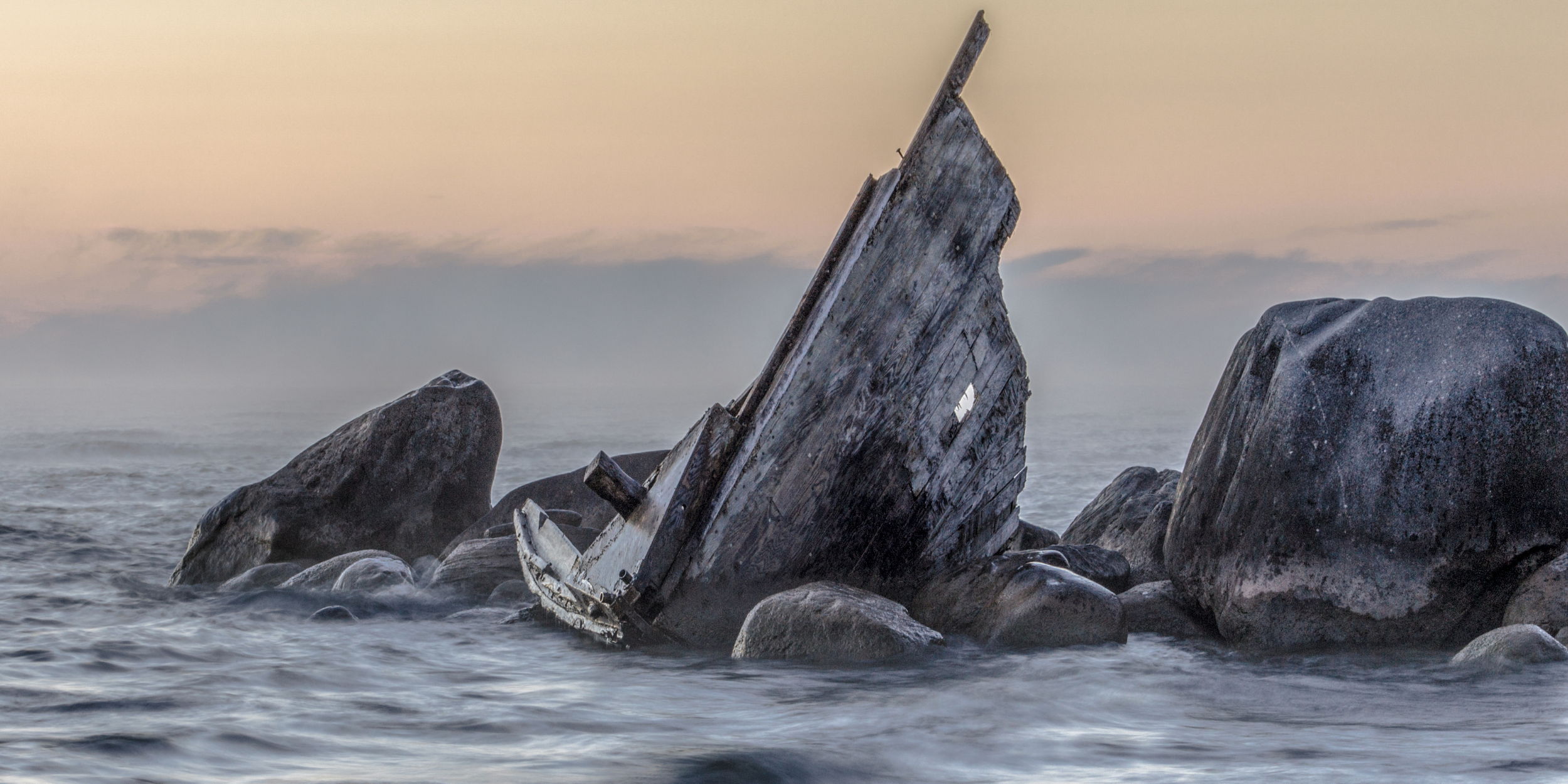
The Great Lakes, full of mystery and splendor, have a way of captivating us all. At roughly 14,000 years old, generations of those who inhabit close to its shores know that while beautiful, the lakes are equally powerful and must be respected. It has long been known that the lakes do not give up their dead. Over the years, there have been several who have met their fates in their depths and their remains have sadly never been recovered. Today we’ll delve into what makes our Great Lakes so treacherous, some of the largest shipwrecks in Great Lakes history, and some must-see locations around the shipwreck coast.
What Makes Them Dangerous
There are several factors that account for why the Great Lakes are so treacherous for helmsmen and fellow maritime workers on the lakes. Coming in at number one for most shipwrecks is Lake Erie with an estimated 2,000 vessels. With an average depth of only 62 feet, strong winds lead to very high waves with little distance between them. Unfortunately, this means wooden vessels were particularly susceptible to snapping under their force. This, combined with its frequent violent storms (especially in autumn), contribute to an ever shifting lake floor and sand bar movement which could easily ground ships. Additionally, Lake Erie’s prime location made it the perfect maritime highway for transportation of goods (like coal and ore) during the 1800’s through the early 1900’s. All the conditions above, combined with this high traffic that were bottlenecked into small ports created the perfect storm for frequent collisions.
Often referred to as the “inland-sea”, it is no wonder why Lake Michigan has the most vessels out of any of the other Great Lakes lost in its depths. With its long yet narrow profile, winds are able to travel long distances unobstructed off the coast (called fetch). This longer “fetch” allows more energy from the wind to be transferred into the waves (7). This leads to incredibly fast and steep waves that make it near impossible for a helmsman to turn around if needed. During the Industrial Revolution, Lake Michigan was the major highway to transport goods like lumber to Chicago and Milwaukee. Dense fog (before widespread lighthouses), quick changes in weather patterns, shallow reefs and pressure for a rising demand in goods led many ships to their fate.
A close second to Lake Michigan is Lake Huron, with approximately 1,200 ships resting in its depths. Home to Thunder Bay, otherwise known as “shipwreck alley”, a dangerous 4,300 square-mile stretch that holds over 200 preserved sunken vessels from years past within its grasp. Sudden strong gales, rocky shoals, unpredictable weather systems, and banks of murky fog all contribute to disorienting and unpredictable dangers that helmsmen became accustomed to on their travels (3). Today, the Thunder Bay National Marine Sanctuary and Underwater Preserve protects these extremely well-preserved vessels, along with the some of last remaining personal items aboard in the crewmembers possession that are forever time stamped at their last moments above water.
With its own version of the Bermuda Triangle, known as the Marysburgh Vortex, it is no surprise that Lake Ontario has had hundreds of ships meet their fate on its waves, with many still awaiting discovery on its floor. This triangular area between Mexico Bay, Point Petre, and Wolfe Island is well known for magnetic anomalies and navigational disorientation amongst travelers. Similar to our other Great Lakes, Lake Ontario was another way goods were transported before the widespread use of railroads. With shifting weather patterns in the late fall resulting in strong gales, combined with pressure to deliver goods like coal before winter set in, Lake Ontario was no stranger to shipwrecks. Among these wrecks is the one of the oldest documented shipwrecks of all the Great Lakes, the HMS Ontario in 1780, where 120 lives were lost to its depths (6).
At a maximum depth of 1,333 feet, or roughly 3.7 football fields, Lake Superior is the deepest (and also the coldest) of all the Great Lakes. It spans a massive 31,700 square miles which makes it the largest freshwater lake in the world. It is no wonder that there are at least 350 shipwrecks located in Lake Superior’s waters, with half their locations still remaining undiscovered (2).
Notable Shipwrecks in the Great Lakes

S.S. Eastland (July 24, 1915)
Bound to set sail for an annual company picnic in Michigan City, Indiana, over 2,500 crew and passengers boarded the S.S. Eastland for what was expected to be a day of festivities and family-fun. Sadly, the vessel never left the Chicago river. With the ship at capacity and several passengers taking to its upper decks, along with its retrofitted lifeboats, the ship became overly top heavy and began swaying. The crew attempted to alleviate this by filling its ballast tanks, however not even an hour after the ship sadly capsized (1). A total of 844 people died, many of whom were women and children, in what would become the largest shipwreck in Great Lakes History.
The SS Edmund Fitzgerald (November 10, 1975)
On November 10, 1975, all 29 of S.S. Edmund Fitzgerald’s crewmembers lost their lives. Bound for Detroit after departing Superior, Wisconsin with over twenty thousand tons of iron ore aboard, the Queen of the Lakes abruptly encountered a massive storm producing winds over 90 mph that rivals those produced during hurricanes. Waves were reportedly upwards of 60 ft and she quickly took on water. Tragically, she sank without time for even a distress signal just off the coast of Whitefish Point, Michigan. Today, the exact cause of sinkage remains a mystery, with some claiming structural failure, to being overcome by the lake’s monstrous waves.
Lady Elgin (September 8, 1860)
An exquisite luxury steamship for its time, Lady Elgin’s story has become known as one of the deadliest shipwreck disasters in Great Lakes maritime history. Not even a few hours after departing Chicago in its journey to Milwaukee, she encountered an intense storm that resulted in large waves and poor visibility. Augusta, a lumber schooner, collided against her broadside and an estimated 302 people perished within just 20 minutes as the vessel broke apart and sank to the depths of Lake Michigan in the early morning hours on September 8, 1860 (8).
Bon Voyage (May 10, 1901)
One of the most famous shipwrecks on the Keweenaw Peninsula, the Bon Voyage steamer’s ending is devastatingly tragic. In the evening hours on May 10, 1901, the Bon Voyage passenger steamer caught fire on Lake Superior. In an attempt to escape the flames, the women from the Altman family on board tried to cling to the wreckage and swim to shore. Five of them unfortunately were swept out by the lake’s current and drowned, with only one saved. The boat was beached off the Keweenaw Peninsula by the Portage Ship Canal. After beaching, the crew was able to safely make it to shore. The Captain of the ship stood trial shortly after, as many witnesses reported that the steamer was not in safe condition to travel (5).
Rouse Simmons (November 22, 1912)
On its way to spread merriment and cheer, the Rouse Simmons schooner was returning from Thompson, Michigan on its way to Chicago full of Christmas trees on November 22, 1912, with 16 souls on board. Before departing Michigan with its deck piled 8 ft high with trees, Captain Shuenemann had invited a number of lumberjacks for a ride back to Chicago for the holiday season to visit friends and family. Sailing in November on the Great Lakes was a known risk because of the harshness of late-season storms. Tragically, when only 5 miles off the coast of Wisconsin and flying a distress flag, the Rouse Simmons encountered a strong northwest gale in the middle of a snowstorm that drove the ship southward. It was then that the Captain telephoned the Two-Rivers’ Life-Saving Station and a ship was immediately deployed to its aid, but the Rouse Simmons had completely vanished upon the ship’s arrival, its last location to remain a mystery for 59 years until it was discovered 6 miles northeast of Rawley Point, Wisconsin (4).
Stories That Live On

Today, there are several locations around the Great Lakes that work to preserve the artifacts of shipwrecks and tell the stories of those whose lives were lost on their waters.
The Great Lakes Shipwreck Museum (Paradise, MI)
Located in Paradise, Michigan in the Upper Peninsula, The Great Lakes Shipwreck Museum explores the history of Lake Superior’s shipwreck coast, including those around Whitefish Point. The Great lakes Shipwreck Historical Society has its very own research vessel and a remotely operated underwater vehicle equipped to explore and document Lake Superior’s shipwrecks. If you’re an Edmund Fitzgerald history buff, this is definitely a must-see, as the museum explores its tragic loss and even houses its bell recovered from the wreckage. Summer through fall is the time to visit, with the museum being open May 1 through October 31. You can view more information on their website here.
Additional information: All buildings close by 5 pm so plan to get there early to have time to explore all 5 locations, including the 1861 USLHS Lighthouse Keeper’s Quarters.
Great Lakes Maritime Heritage Center and Thunder Bay National Marine Sanctuary (Alpena, MI)
Do you enjoy kayaking, canoeing, paddleboarding, snorkeling, or even diving? Do you have a passion for Great Lakes maritime history? If you answered yes, then the Great Lakes Maritime Heritage Center and Thunder Bay National Marine Sanctuary is a must-see. The Great Lakes Maritime Heritage Center houses over 10k square feet of exhibit space, including interactive exhibits like walking a lifesize schooner deck in conditions that emulate a storm on Lake Huron.
If you are feeling a little more adventurous, you can explore shipwrecks firsthand on one of Alpena Shipwreck Tours on the waters of Thundar Bay National Marine Sanctuary, the largest national marine sanctuary and underwater preserve in the Great Lakes. Book a glass bottom boat shipwreck tour to view sunken ships from the safety of a boat (perfect if you have adventure-seeking kids in-tow). If you love paddling in your own watercraft, you can book an Alpena kayak tour and board their catamaran, where they take you to the underwater sanctuary. Once there, you can kayak in tandem with a guide that leads you around the area and educates you on what lies below.
Additional Tips: Admission to the Great Lakes Maritime Heritage Center is free of charge and open year round. However, if you are planning to also explore the Thunder Bay National Marine Sanctuary, plan to visit during late spring-early fall and to purchase tickets. Online reservations to book through Alpena Shipwreck Tours can be purchased in advance here. While the crystal clear water allows for easy viewing of the shipwrecks, cloudy overcast days make for the best viewing experience so try to schedule on these days if possible.
Straits of Mackinac Shipwreck Preserve (For Divers) (Mackinaw City, MI)
If you enjoy diving and have the knack to explore shipwrecks, add exploring the Straits of Mackinac Shipwreck Preserve to your summer bucket list. Covering 148 square miles of Lake Huron and Lake Michigan, this underwater preserve contains ships dating back to 1856 (Sandusky). A total of 14 wrecks in this area and 8 buoyed sites in shallower waters are explorable. See more information on their website here.
Additional information: If planning a diving trip to the area, plan on also visiting Mackinac Breccia underwater formations, just to the north of Arch Rock off Mackinac Island. New to diving? Look into exploring their shallower shipwrecks, with the shallowest being just 8 ft deep (L.B. Coates).
Glass Bottom Shipwreck Tours (Munising, MI)
If you are planning a trip to the Great Lakes Shipwreck Museum, look into adding a trip to Munising for their Glass Bottom Shipwreck Tours to your list. The tour is just two hours long and explores two shipwrecks on Lake Superior, Herman H. Hettler (1926) and Bermuda (1870). Tours run from Memorial Day through September 30th and purchasing tickets in advance is strongly encouraged as spots can fill up quickly. The tour also includes a ride by the historic Grand Island East Channel Lighthouse, dating back to 1867. You can view their tour route and more information on their website here.
Additional Information: Looking to scuba dive the wrecks in this area? Glass Bottom Shipwreck Tours has passenger boats available to escort you to wreck locations where you can dive up to two shipwreck dives per trip. You can visit their website here for more information.
Wisconsin Maritime Museum (Manitowoc, WI)
If you have a passion for maritime history, including submarines, steam engines, and shipwrecks, the Wisconsin Maritime Museum is worth a visit. Exploring everything from boat building and craftsmanship through the years to the immersive WWII submarine, the Cobia’s, battle recreation. If you have young kids, be sure to check out their Little Lakefarers Room and Waterways Room for an interactive maritime, kid-friendly play experience. And last but not least, be sure to check out Wisconsin’s Shipwreck Coast exhibit, which features stories and artifacts from several shipwrecks over the years that occurred along the Wisconsin shoreline. Visit their website here for more information on their current exhibits.
Additional Information: Be sure to check out their Surfin’ Wisconsin exhibit that explores lake Michigan surf culture and history, open through October 2026. Manitowoc Breakwater Lighthouse is also open during the summer months of 2026 for guided tours, so try to visit during this time to make the most out of your trip.
Indiana University Museum of Archaeology and Anthropology (Bloomington, IN)
Indiana University’s Shipwrecks: Living Museums exhibit is a great way to explore the history of Lake Michigan shipwrecks off the coast of Indiana and the importance of their preservation and historical significance to maritime history on the Great Lakes. Open through May of 2028, the J.D. Marshall and Muskegon Shipwreck Nature Preserves, along with two Caribbean Shipwrecked vessels, will be explored in detail, as well as their roles as living museums, their importance in trade routes, and the importance of their preservation for future generations.
Split Rock Lighthouse (Two Harbors, MN)
In 1905, the Mataafa Storm on Lake Superior wreaked havoc on ships, resulting in upwards of 30 shipwrecks along the North Shore, thus prompting the construction of Split Rock Lighthouse. Today, the lighthouse stands as an important reminder of this location’s dangerous and devastating history. There are several educational events held here throughout the year. Start your trip by visiting the Minnesota Historical Society’s Visitor Center and explore their exhibit that features a glimpse into the shipwrecks that forever changed this coast along with personal testimonies.
Additional Information: Upcoming events include the Keeper’s Tours throughout the year and even a Free Admission Day to Split Rock Lighthouse on June 27, and their Conquering the Cliffs Tours. More information, including ticket prices and the event schedule, can be viewed on their website here.
Conclusion
Several ships and their crew have fallen victim to the dangers of the inland seas over the years. Their preserved wreckage serves as an important reminder of how treacherous and unforgiving the Great Lakes can be. They demand respect and understanding in order for one to safely navigate them. We hope this guide helps in your journey to explore the history and remains of discovered shipwrecks in the Great Lakes. Let us know in the comments if you have visited any of these shipwrecks or museums as we’d love to hear from you and your experiences!
Interested in reading more about Great Lakes maritime heritage? Read our blog on Keepers of the Light: A Journey to Iconic Beacons of Lake Superior.
Sources
1.
Trident History – 1915 S. S. EASTLAND Capsizing LT Bill Fitzgerald (MSC). www.dco.uscg.mil
2.
Shipwrecks | Minnesota Historical Society. Accessed May 28, 2026. https://www.mnhs.org/splitrock/learn/shipwrecks
3.
Sanctuary History | Thunder Bay National Marine Sanctuary. Accessed May 28, 2026. https://thunderbay.noaa.gov/about/history.html
4.
Rouse Simmons (1868) – WI Shipwrecks. Accessed June 3, 2026. https://www.wisconsinshipwrecks.org/Vessel/Details/541
5.
Red Ridge, MI steamer fire, May 1901. Accessed June 3, 2026. https://www.garon.us/images2/news/1901%2005%20Bon%20Voyage%20shipwreck..htm
6.
HMS Ontario Shipwreck | Niagara Falls National Heritage Area. Accessed May 28, 2026. https://www.discoverniagara.org/hms-ontario-shipwreck
7.
Sailing WC. Understanding Lake Michigan Weather Patterns for Sailors. Windy City Sailing. January 30, 2026. Accessed May 28, 2026. https://www.windycitysailing.com/understanding-lake-michigan-weather-patterns-for-sailors
8.
McChesney M. Death on Lake Michigan: The Lady Elgin Tragedy – Winnetka Historical Society. May 25, 2013. Accessed May 28, 2026. https://www.winnetkahistory.org/gazette/death-on-lake-michigan-the-lady-elgin-tragedy/


